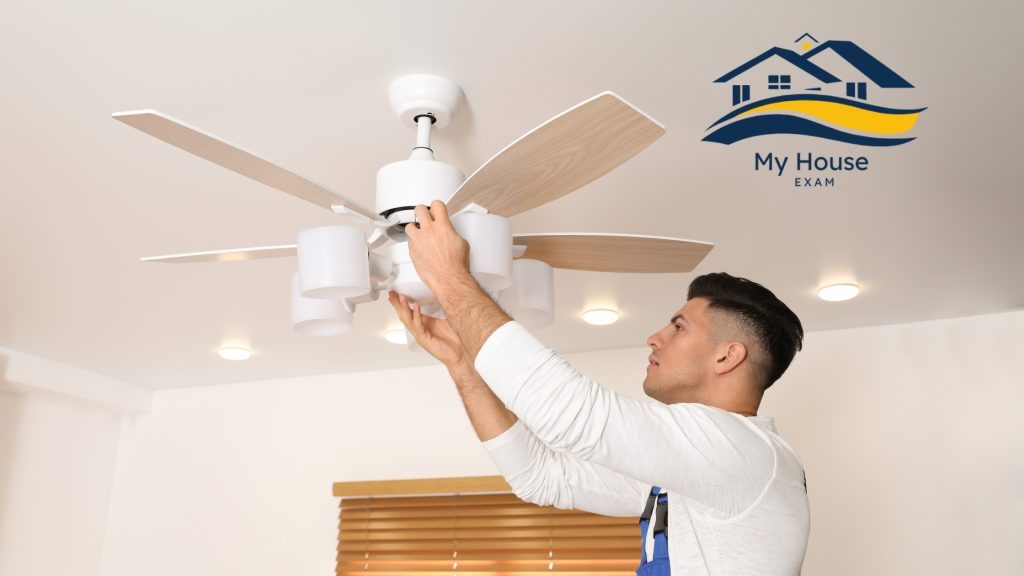
Home Inspection Tip:
A ceiling fan has two main settings designed to help you adjust the temperature in your home: summer and winter. Here’s how they work:
Summer Setting (Counter-clockwise):
-
- In this setting, the fan blades rotate counter-clockwise. This pushes air down towards the floor.
-
- As the air moves down, it creates a cool breeze across your skin. This “wind chill” effect makes you feel cooler, even though the actual room temperature hasn’t changed.
-
- It’s recommended that you use the summer setting on medium or high speed for maximum cooling effect.
Winter Setting (Clockwise):
-
- When switched to winter mode, the fan blades rotate clockwise. This creates an updraft that pulls warm air trapped near the ceiling down towards the living space.
-
- Warm air naturally rises, so this gentle circulation helps distribute the heat more evenly throughout the room.
-
- By using the winter setting on a low speed, you can potentially reduce your reliance on your heating system and save on energy costs.
Hero of Home Comfort: A Guide to Ceiling Fans By a Certified Home Inspector!
Ceiling fans, those large fixtures overhead, are often taken for granted. Yet, these unassuming appliances play a vital role in regulating temperature, improving air circulation, the home inspection & even enhancing the ambiance of a space. As a Home Inspector these are important items to inspect that often get overlooked. This comprehensive guide delves into the world of ceiling fans, exploring their importance, functionality, and the various factors to consider when choosing the perfect one for your home.
The Power of Air Movement: Why Ceiling Fans Matter
The primary function of a ceiling fan lies in its ability to circulate air. By rotating its blades, the fan creates a gentle breeze that disrupts the stagnant layer of warm or cool air that naturally forms around people. This movement serves two key purposes:
- Cooling Effect (Summer): During hot weather, the wind chill effect created by the fan makes you feel cooler. Even a slight increase in air movement can significantly enhance comfort, allowing you to raise your thermostat setting and potentially reduce energy consumption associated with air conditioning.
- Improved Heating Efficiency (Winter): In colder months, ceiling fans can be used to redistribute warm air trapped near the ceiling. By setting the fan to rotate clockwise, warm air is pushed down towards the living space, promoting a more even temperature distribution and potentially reducing reliance on heating systems.
However, the benefits of ceiling fans extend beyond basic temperature regulation. Here are some additional advantages to consider:
- Reduced Stagnation: Ceiling fans help prevent air stagnation, which can trap dust, allergens, and even odors. Improved air circulation promotes a fresher and healthier environment.
- Enhanced Evaporation: Increased air movement aids in the evaporation of sweat, making you feel cooler and more comfortable in humid environments.
- Ambiance and White Noise: The gentle hum of a ceiling fan can create a calming and soothing atmosphere. Additionally, the white noise generated by the fan can mask unwanted sounds, promoting better sleep.
- Energy Savings: Studies suggest that ceiling fans used in conjunction with air conditioning can potentially reduce energy consumption by up to 40% in summer. This translates to lower utility bills and a smaller environmental footprint.
Functionality Breakdown: Understanding Ceiling Fan Components
Ceiling fans consist of several key components, each playing a role in its overall function & should be evaluated in your home inspection:
- Motor: The heart of the fan, the motor drives the rotation of the blades. Different motor types offer varying levels of power, efficiency, and noise generation.
- Blades: The number and design of blades significantly impact airflow. More blades generally create a stronger breeze, while blade design influences the direction and intensity of airflow.
- Direction Control Switch: This switch allows you to reverse the direction of blade rotation. Counterclockwise operation (summer mode) creates a cooling effect, while clockwise (winter mode) promotes warm air circulation.
- Light Kit (Optional): Many ceiling fans incorporate a light fixture, offering dual functionality in a single unit.
- Speed Control Settings: Most fans offer various speed settings to adjust the intensity of the airflow according to your needs.
- Remote Control (Optional): For added convenience, some ceiling fans come equipped with remote controls for adjusting settings without needing to reach for the fixture itself.
Choosing the Right Ceiling Fan: Factors to Consider
With a multitude of ceiling fan options available, selecting the perfect one for your needs requires careful consideration of several factors:
- Room Size: The size of the room should dictate the fan size. Larger rooms require fans with a wider blade span to effectively circulate air. As a general rule, choose a fan with a blade diameter that is roughly 30% of the room’s width.
- Ceiling Height: The height of your ceiling plays a crucial role. Fans should be installed with adequate clearance above the floor and any furniture to prevent accidental contact with the blades. Low-profile fans are available for rooms with limited ceiling height.
- Style: Ceiling fans come in a wide array of styles, from traditional to modern, minimalist to ornate. Consider the overall aesthetic of your space and choose a fan that complements your décor.
- Material: Ceiling fans are typically made from wood, metal, or plastic. Each material offers unique advantages and disadvantages. Wood offers a classic look but requires more maintenance. Metal is durable and versatile but can be heavier. Plastic is lightweight and affordable but may not be as visually appealing as other options.
- Number of Blades: Ceiling fans typically have between 3 and 5 blades. More blades generally create a stronger airflow, but they can also be noisier.
- Noise Level: Consider the noise level generated by the fan, particularly if it will be installed in a bedroom or other quiet space. Look for fans with motors known for quiet operation.
- Light Kit: Decide if you want a fan with a built-in light fixture. This can be a space-saving solution, but ensure the